Comments on the Relationship Between Corporate Social Responsibility and Profitability

My research for my MA thesis has had a nice overlap with the accounting ethics class which I am TAing for. Students have been learning about the benefits that corporate social responsibility (CSR) has for businesses. The students learn that there are various benefits from CSR which may lead to greater profitability in the future, such as a competitive advantage, the ability to attract better job applicants, and a better reputation. But, must that be the case or is it only contingently so? Here, I want to put forward two arguments. The first, is that the practice of CSR leading to higher profitability is only contingently the case, not necessarily the case. The second, is about the way we contrast CSR to “single bottom line” or “profit maximizing” strategies. My contention is that it is important to contrast the two as practicing CSR is only contingently a profit maximizing strategy.

Corporate Social Responsibility and the Triple Bottom Line Agenda

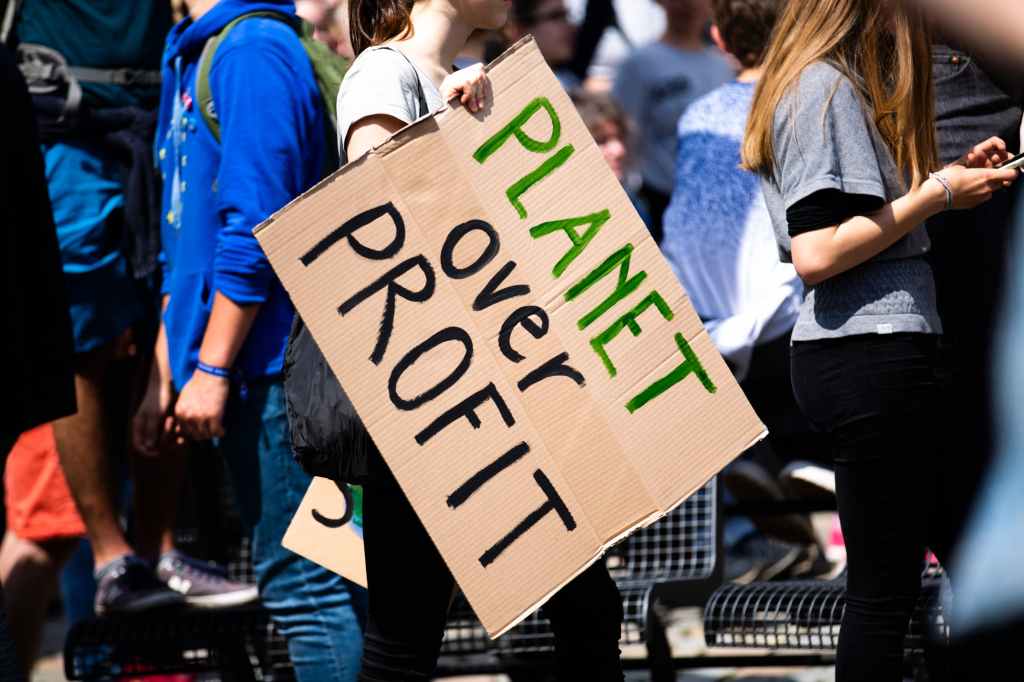
One way of thinking about CSR is the “triple bottom line”, a term originally coined by John Elkington in 1994. The triple bottom lines asks companies to not only be concerned with profits (single bottom line) but to also concern themselves with community and the environment. This led to the “3P formulation” of “people, planet and profits”. Elkington argues that the push to practice triple bottom line thinking arises through seven “global cultural revolutions”. They are the following:

  1. Markets – Companies are under greater pressure from competition both domestically and internationally
  2. Values – Shifting societal values have lead to consumers caring a great deal about how the companies they purchase from treat others
  3. Transparency – The actions of companies are becoming increasingly clear to consumers and companies must therefore be more conscious of the actions they take as they are under more scrutiny
  4. Life-Cycle Technology – A new focus from consumers on the sustainability of how products are made and how they can be disposed
  5. Partners – Companies are driven to partner with other companies that they would have previously seen as competition in order to achieve success within the new environment
  6. Time – A demand for companies to be more far-sighted in their decision making
  7. Corporate Governance – A dramatic shift in our conception of how businesses should be run including a change in ideas about who should run companies and who companies should serve

The Positive Correlation between CSR and Profitability is only Contingent

In the undergraduate accounting ethics course that I am TAing, students are taught that practicing CSR can not only make a company act more ethically but can also help companies increase profits. The empirical evidence for CSR’s profitability is somewhat unclear as Table 1 shows here. What’s interesting to note about Elkington’s push for the triple bottom line is that it is necessary only in light of changes in consumer preferences and the actions of competition. That is to say that there are specific requirements about social reality that need to be present in order for the triple bottom line strategy to be effective and, as students are taught, help increase profits. Thus, if these social conditions are not met, then it’s possible that the triple bottom line would not be effective at increasing profits. For example, if consumers did not care at all about the sustainability of their products, then there would be no reason to develop “Life-Cycle Technology”.

Thus, CSR does not necessarily align with increased profits and it is only contingently the case that they do today. This fact is made more obvious when we consider possible laws that would make practicing CSR obviously less profitable than not practicing it. Consider, for example, if a law was in place that subsidized carbon emissions into our atmosphere: “For each tonne of carbon dioxide that a company emits, they will be awarded $100,000”. Further, suppose that for each tonne of carbon emissions, there is only a $1,000 loss of revenue due to consumer preferences for environmentally friendly products. Imagine that you are an oil refinery or an automobile manufacturer. Would it be more profitable to take care of the environment (or “planet” using 3P language) or would it be more profitable to pollute? Surely it would be more profitable to pollute! In fact, one should want to maximize their pollution. It is only because of  taxes imposed on carbon emissions and consumer preferences for environmentally friendly products that practicing CSR (caring for the planet, in this case) is profitable.

Another, perhaps even starker example, would be a manufacturing company in Nazi Germany. Certainly, one could make a lot of money by producing for the Nazis. As we know, this sort of corporate-state alliance in the production of goods for the state was standard in Nazi Germany. Rainer Zitelmann quotes Hitler in his book Hitler: The Policies of Seduction who said,

I tell German industry, for example, ‘You have to produce such and such now.’ I then return to the Four-Year Plan. If German industry were to answer me, ‘We are not able to’, then I would say to it, ‘Fine, then I will take that over myself, but it must be done.’ But, if industry tells me ‘We will do that’, then I am very glad I do not need to take that on.

It was not only the case that businesses profited by producing for the Nazis, but were threatened with the nationalization of their industry if they did not comply. Helping the Nazis if asked might have been the only profitable way to operate your business. It should not take much to convince the reader that aiding the Nazis would scarcely constitute caring for “people” of the 3P model.

What I hope I’ve shown is that the positive correlation between CSR and profitability is not necessarily the case but only contingently so. It is only because of the legal rules, the preferences of consumers, and other social factors that CSR leads to profitability.

Why Contrast CSR with Profit-Maximization?

Students are offered a number of reasons why practicing CSR may lead to increased profitability. It may offer a competitive advantage in providing an “ethical” alternative to other companies offering similar products or services, the reputation of the company can be helped allowing them to better recover from scandals, there is better access to financing as investors are often looking to invest in ethical companies, and many more. These are intuitively correct. Certainly, I would rather buy from a company that treats its workers better or that donates to initiatives that help the poor than one that doesn’t, ceteris paribus. However, as I’ve tried to make clear above, it is only because I want to help workers and the poor that this sort of competitive advantage could arise from practicing CSR. If I did not, no such competitive advantage would arise from these practices.

What is curious is the way we sometimes talk about CSR. Our language seems to show that practicing CSR is somehow different than just aiming at profit-maximization. Consider the “triple bottom line” slogan of “people, planet, and profits” which contrasts itself with the “single bottom line” of merely profits. Clearly when we’re speaking about these ideas we see profit as opposed to CSR in a sense. But if CSR leads to greater profitability then why do we contrast the two? Why do we not say, “Go forth and make profit! CSR will result incidentally!”? For if the two are positively correlated then there is no need for distinction or contrast. The reason that we do not do this, I suspect, is that we intuitively know what I have tried to show above: sometimes CSR and profitability are opposed to one another.

It is important to make this point clear when teaching managers about CSR. If we were to simply say, “Go ahead, maximize profit! Worry about nothing else! It will all add to corporate social responsibility,” we might inadvertently be telling managers to act unethically. Think back to the example of businesses in Nazi Germany. If we are to say the opposite, “Go ahead and take care of the people and planet as much as you want! Profit will surely follow!” we may inadvertently be telling managers to misappropriate assets owned by shareholders for unprofitable purposes. Thus it is paramount that it be explained that while it is often the case that practicing CSR will result in greater profit, it is not always the case. Our intuitive distinction between CSR and profit-maximization are well-founded and we should continue to speak about the two in these terms; sometimes aligned and sometimes opposed.
Christian Distributism & Anarcho-Capitalism

Chesterton_Holding_Book_and_PenChronicles Magazine has published an interesting three-article series in which three authors defend “Laissez-Faire Capitalism”, “Economic Nationalism”, and “Christian Distributism” against one another. They are written by Walter Block, Darrell Dow, and Allan C. Carlson respectively. I suggest that any conservative reader of my blog check them out as they are all well-written and offer short but specific insight into the proposed policies of each economic schema.

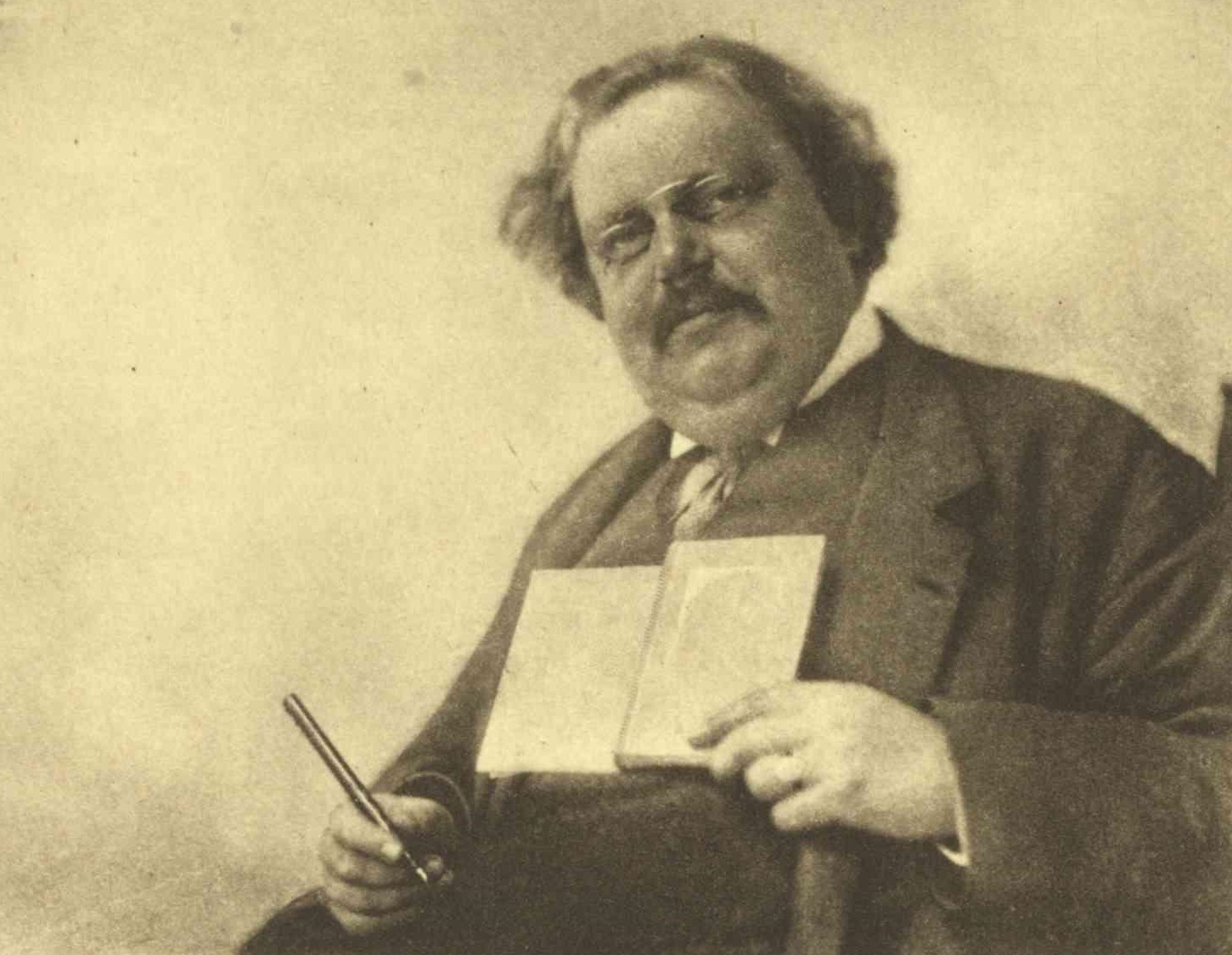
I was particularly interested in Dr. Carlson’s article as he notes that, “Critics of Christian distributism commonly fault its lack of specificity.” Of the little that I know about Christian distributism, this was also a criticism I had. But, to my pleasant surprise, Carlson points out that, “In truth, important architects of this way of living have been very clear about the policies that should be pursued.” Carlson then lists specific policies proposed by G.K. Chesterton and Hilaire Belloc, two Christian distributists.

I’m no expert on Christian distributism, G.K. Chesterton, or Hilaire Belloc, but I know a thing or two about libertarianism and anarcho-capitalism. Here, I want to take the policies that Chesterton and Belloc propose and answer to what extent they are compatible with an anarcho-capitalist model.

1. Breaking up monopolies, supporting expanded profit sharing, and transferring ownership to worker guilds

Where does the anarcho-capitalist or libertarian stand on breaking up monopolies? If by monopolies you mean private businesses who make their money from voluntary exchange, who happen to be the only sellers of a particular good or service in an area, then we cannot advocate that we take their justly acquired property. These companies have sold to the public what the public is willing to buy If we find no other seller who can provide desired goods at a desirable price, then so be it; the consumers have chosen this one firm to be the only seller of that good or service.

But, consider the definition of monopoly provided by early American economist, Francis Wayland: “A monopoly is an exclusive right granted to a man, or to a company of men, to employ their labor or capital in some particular manner.” With this definition in mind, the anarcho-capitalist is all for breaking up monopolies! Who is the greatest holder of monopolistic enterprises? The state! In many cases the state has given unto itself the right to be the sole producer of energy, defense, adjudication services, postal services, and more. Why should any group of people have the sole right to use their own labor or property in some specified way. Let loose the dogs of competition and let everyone produce. The consumer will decide who is best, not the government.

And when we scrap these government monopolies, who should gain ownership? The workers! They are the ones who were using the dam, the postal delivery trucks, or whatever it may be. They can become the rightful owners of government “property” and use the capital to produce what the market will buy. And if they cannot do so, then the doors of competition will have been made wide open for anyone who can produce at a higher quality or cheaper price.

2. Redistributing farmland and other natural resources, taxing transfer contracts to discourage the sale of small properties to big proprietors, and encouraging the division of big estates for sale to families

Here, the libertarian cannot agree. Why should a man not be able to decide for himself to whom he will sell his land? What if a farmer should be poor and think it best to sell his land and find new occupation elsewhere? Should we tell him that he does not deserve the highest price for his land, that he must sacrifice unto the small farmer, the potential profits he could have had from the sale to the larger? Must we impoverish him further by taxing the proceeds from his sale?

3. Prosecuting fraudulent capitalists, such as the financiers behind the economic crisis of 2008

The libertarian should wholeheartedly support this. As anarcho-capitalist Murray Rothbard writes,

Under our proposed theory, would fraud be actionable at law? Yes, because fraud is failure to fulfill a voluntarily agreed upon transfer of property, and is therefore implicit theft. If, for example, A sells to B a package which A says contains a radio, and it contains only a pile of scrap metal, then A has taken B’s money and not fulfilled the agreed upon conditions for such a transfer-the delivery of a radio.

And this is to say nothing of the bankers guilty of destroying America’s prosperity in 2008. Why should these crooks have been bailed out? Why should the American people be forced to foot the bill when these bankers have so recklessly invested their money? These wealthy elites should suffer the same consequences as all business owners. If they cannot pay their incurred debts, then they must go bankrupt! And, if their gains come from fraudulent business activities, then they should be tried and prosecuted for their crimes. Let no man get rich from ill-gotten gains.

4. Encouraging healthy self-sufficiency, by scrapping urban zoning rules that ban fences, chicken coops, vegetable gardens, and small shops;

The libertarian must agree! Let us do away with the horrific zoning laws which have only caused harm by forcing people to use land sub-optimally. Of fences and coups, the libertarian is, again, supportive. These implements are important for the protection of one’s own private property. Let us not forget that barbed wire was invented to protect one’s private property from ranchers’ cattle who would trespass and destroy the land.

5. Decentralizing industry, cheapening electricity, and expanding power grids which Chesterton said “might lead to many little workshops”

Just as above, let us eliminate the government monopolies, including those that they have on energy. Why should we let one monopolistic power decide who will get electricity and at what price?

6. Encouraging a healthy countryside and family-scale agriculture, which Belloc said “must be privileged as against the diseased society around it” in terms of both credit and taxation

If the anarcho-capitalist had their way, then we could accept no such privilege in taxation for anyone. Instead, we would eliminate all taxes. No one would have to pay taxes including agricultural property tax, sales taxes on agricultural products, taxes on the fuel used to transport agricultural products, export taxes on agricultural products, or tariffs on farming equipment. Everyone, including farmers, could benefit from the reduced taxation upon their justly acquired property.

Under an anarcho-capitalist regime, credit would be given to those that earn it. If farmers can produce greater revenue, are more able to pay off their loans on time, have lower rates on insolvency, then availability of credit will be abundant for them on the market.

7. Restoring small shops and using differential taxation against giant retailers.

Unfortunately, we must, again, part from the Christian ditributists as the anarcho-capitalist supports equal amounts taxation for all; none.

What About Black Market Self-Defense?

photo-1573511860313-d333c8022170Dr. Walter Block has recently written a great article outlining a few current events in which the libertarian is unable to clearly see which side he should “take” on the matter. His thoughts nearly echo my own and given that he is the amazing writer he is, he has said it much better than I ever could so I suggest you read it. One issue that he raised as being unclear for the libertarian is the defunding of government police.

There is an obvious libertarian replacement for the horrific institution of government police: Private police! But, as Block points out, we’re not going to get that any time soon. Instead, we’re faced with asking if no municipal police is a better option than some municipal police. Obviously, the libertarian should be immediately skeptical of the muscle of the state who is tasked with actually executing state-sanctioned violence upon its citizenry. This skepticism finds merit in the reality that we face with how government police actually act. As Block points out, “[T]o say nothing of every once in a rare while stepping on the neck of a handcuffed prisoner and murdering him, they attack victimless criminals such as those engaged in “capitalist acts between consenting adults” (in the felicitous phraseology of Robert Nozick) regarding sex, drugs, gambling, etc.” But, this is not the end of the story. The reason we might want to keep them around is because government police do, even if rarely, sometimes stop or deter real crime (in the libertarian sense of the word). Sometimes they catch robbers, murderers, rapists and the like and it’s theorized by some that police presence has deterred would-be criminals from committing those crimes in the first place.

So where should we stand on defunding this institution if we cannot immediately replace them with private police? The answer, unfortunately, is not at all clear. Here, however, I want to point to a factor that I think should be considered; a black market for self-defense. If we did defund municipal police, to what extent could we prevent crime (in the libertarian sense) with private but illegal (in the de jure sense) self-defense?

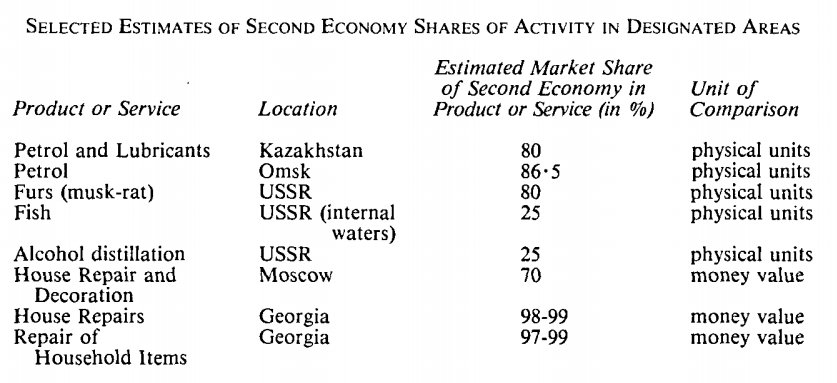
In the U.S.S.R., there emerged a “second economy” for goods and services where the state did not efficiently provide goods and services that people wanted. These second economies were made up of private sales of goods and services which were illegal to sell privately and thus made up a black market. Economists, Gregory Grossman and Dennis O’Hearn studied these second markets closely in the 70s and empirical data provided by this O’Hearn article, claims that the second economy did not make up only some small percentage of trade within the U.S.S.R. and the Eastern Bloc but was all-pervasive.

Capture

As the above table shows, more than half of petrol in some areas was traded in the second economy and almost all repairs were performed by the second economy in Georgia. So, when the government is unable to properly provide for its citizenry, the people take to the black market.

Might we expect something similar if there were no more government police in our cities? Might we expect that those who are without protection from crime could find solace and protection in private black market defense agencies? It may appear that defense and security are not the same as petrol, fish, and household repairs, but why is that? Why should we look at this industry differently than any other? Do not the economic laws that apply to petrol, fish, and household repairs also apply to defense? As the great Gustave de Molinari writes,

It offends reason to believe that a well-established natural law can admit of exceptions. A natural law must hold everywhere and always, or be invalid. I cannot believe, for example, that the universal law of gravitation, which governs the physical world, is ever suspended in any instance or at any point of the universe. Now I consider economic laws comparable to natural laws, and I have just as much faith in the principle of the division of labor as I have in the universal law of gravitation. I believe that while these principles can be disturbed, they admit of no exceptions.

But, if this is the case, the production if security should not be removed from the jurisdiction of free competition; and if it is removed, society as a whole suffers a loss.

Either this is logical and true, or else the principles on which economic science is based are invalid.

Now this is not to say that black market self-defense will necessarily arise if we were to defund municipal police. Certainly, the state would attempt to quell this sort of crime quickly for it could never admit that we might produce without government that one service upon which a great deal of its authority is derived; the ability to protect oneself. And as Murray Rothbard writes, “The gravest crimes in the State’s lexicon are almost invariably not invasions of private person or property, but dangers to its own contentment” As we have seen in the U.S. the state has oft made it difficult to defend oneself legally with the introduction of gun regulations, the suppression of militias, and the supposed crime of resisting arrest.

But the possibility of a black market for self-defense may arise if there is a void left for personal protection if we wholly rid ourselves of municipal police. While this may not tell us the full story and doesn’t give us a wholly satisfactory libertarian answer to whether or not we should defund municipal police, it is at least a “point” in favor of doing so.


Compassion for Victims

We’re all scared, no doubt. How could you not be? It looks like the world is ending. We’ve been unable to work for months and now, the U.S. looks like Rome in 410 AD, police are forcibly attacking peaceful protesters, and there appears to be no semblance of law and order. I feel, to a great extent, glad to be physically distant from the U.S. right now.

There seems to be a dialogue between libertarians right now about how we should speak in online spaces about the current goings on of the U.S. On one hand, it seems to some that speaking about the evils of looting are horrific at this time. And I sympathize with this point of view: “We are here! This is what we feared! The Leviathan state has come crashing down upon us and you are concerned with a few looters who have taken advantage of the situation?! Now, we can point to the horrors of police brutality and the militarization of police which has only expanded in the last century! Disregard this small injustice to focus on the bigger picture!” Certainly, I agree with this sentiment. I think that it is important to speak out against police brutality and say openly and explicitly that calling the National Guard into the streets of the U.S. is nothing short of tyranny.

But, I don’t know that it’s fair to immediately dismiss anyone who has concerns about looting. It is easy to say that this is small and unimportant in the grand scheme of things. But should we collapse on our own principles of private property and put these views to the side simply because there are worse things happening right now? What about our commitment to individual rights? Should “more important things” make us silent on those issues? Monetary manipulation and foreign intervention are two of the greatest invasions of individual rights that the state is guilty of. But does this mean that we should be silent on the municipalization of garbage disposal? No! We must be steadfast in our beliefs and speak out even when particular injustices may seem trivial in the grand scheme of things. And further, simply because the view is unpopular, does it mean we should not speak out? Again, no! Have we not always held on to the view that one has the right to racially discriminate concerning who can use their property? We have. Even as the view is becoming intolerable to most people. A couple weeks ago I wrote about the “gradal radical” who is someone who is uncompromising in their beliefs. And we should be gradal radicals! We shouldn’t compromise on our view of private property rights simply because there are bigger issues or that our views are not popular.

It is also easy to say that looters are full of righteous anger. It is righteous, is it not!? Have not the American people experienced police brutality for genuine centuries? And their outrage with police brutality is met with more police who are even more brutal. We should have compassion for these people who have long suffered these great injustices especially for black people. But why must compassion end there? What about property owners who have their livelihoods destroyed by looters? Shouldn’t we have compassion for them as well? It is easy to disregard those people, but you wouldn’t feel the same way if it was your house being looted, if it was your life work being destroyed. Consider the case of Stephanie Wilford who said that she wished she was dead instead of having to have faced rioters. These victims of looting are real people with real lives, and to those concerned with justice, with real rights! Should we not have compassion for them as well and openly say that their rights are important and being infringed upon in this situation? We are not brutes because we also care about these people.

download

Stephanie Wilford

I want to leave the words of the great Walter Block here about how we view interpersonal conflict. The libertarian is faced with the following situation:

A man is standing at the edge of his balcony on the 45th floor of a high rise apartment building. He teeters over the side and drops to the 25th floor. There, fortunately, he is able to grab hold of a flagpole, jutting out from the building. He would like nothing so much as to be able to inch his way down onto the 25th story balcony, go inside that apartment, leave it for the hall, and take the elevator back up to his own apartment.

Unhappily, the owner of the 25 floor apartment, and of the flagpole to which he is precariously holding, comes out on the deck with a shotgun and demands that he respect private property rights and let go, thus dropping to his death

How can the libertarian respond to this problem? Well, for Block, it is to take the perspective of the property owner into account:

Suppose the owner is a frail old man, and the flagpole sitter a young strong one. Suppose the latter will victimize the former if allowed access to the apartment. … The problem with the scenario as stated is that it takes place all from the point of view of the flagpole sitter. When once we look at matters from the [perspective] of the property owner the anti libertarian conclusion drawn by the critic no longer seems so obvious.

When we are speaking in defense of private property rights and against looting, we are not merely saying that looters are evil, immoral, or criminal. We are saying that looting victims are just that: victims. They have been deprived of their just property and their livelihoods. There is no reason that in this terrifying time, we cannot also have compassion for these victims as we have compassion for all of those who suffer injustice.

Shared Ownership & Business Partnerships: What is the Solution to Split Shareholder Voting?

Hands upI would like to begin this post by pointing to a difference between Hans-Hermann Hoppe’s 2014 lecture at the Property and Freedom Society and its subsequent publication in his 2018 book, Getting Libertarianism Right. In his lecture Hoppe says, “Absent, now, a perfect harmony of all interests, conflicts regarding scarce resources can only be avoided if all scarce resources are assigned as private, exclusive property to some specified individual or individuals.” (Emphasis mine) However, in the lecture’s publication in the Getting Libertarianism Right, Hoppe has carefully removed the “or individuals” to write, “Absent a perfect harmony of all interests, conflicts regarding scarce resources can only be avoided if all scarce resources are assigned as private, exclusive property to some specified individual.” Neither of these descriptions, as I will show, are incorrect. It is possible for rights over the control of some resource to be allocated between multiple individuals. Hoppe makes himself clearer in his 2015 lecture (which is also published in Getting Libertarianism Right) stating; “Logically, what is required to avoid all conflict is clear: It is only necessary that every good be always and at all times owned privately, i.e., controlled exclusively by some specified individual (or individual partnership or association)”.

The importance of this distinction is paramount for the libertarian. If we are to avoid human conflict, unrestricted title to some scarce resource cannot be assigned to two individuals. For if both Jones and Smith have the right to use some resource x as they please (i.e. have unrestricted title to x) this entails that Jones has the right to take x to Istanbul on Sunday at noon and Smith has the right to take x to Brussels on Sunday at noon, a logical impossibility. There are some libertarians who refuse to take this problem seriously. See here for a discussion between Walter Block and Bryan Caplan in which Caplan argues, “If you asked a married couple “Who owns your car?” many people would say “We both own it. Fully.” You can either berate them for self-contradiction, or interpret their statement charitably through the usual lens of marital property.” However, as Block correctly points out,

Two people can no more FULLY own a car than there can be two people in the same identical place. Married couples typically SHARE ownership in cars they don’t, they CAN’T, both fully own it.

Let me try again on this. Under libertarianism, rights cannot conflict. If there is any conflict, there is an improper specification of rights. But, if A (husband) and B (wife) each fully own a car, then there IS a conflict in rights. Each has a right to do with the car what he or she wants. Now, there may not be an ACTUAL conflict, if they both want the car used for the same purpose. But, there is still a conflict in RIGHTS. A wants the car used for washing it; B wants to take it on a trip. They both have a RIGHT to use the car for these incompatible purposes.

As Block notes, it is possible for people to share ownership. But it cannot be the case that two individuals have conflicting rights over the use of some resource. Let me illustrate with the following example: Suppose that I sell a car to both Smith and Jones. Smith has the right to drive the car every Monday, Tuesday, Wednesday, and Thursday, as long as he parks the car in the same spot every Thursday and Smith has the right to drive the car Friday, Saturday, Sunday as long as he parks the car in the same spot every Sunday. There is no problem with rights of use being assigned this way. As Block puts it, they share ownership.

The reason that the above example is a possible assignment of rights is because the rights of Jones and Smith do not conflict. Contrast this with a case in which Smith and Jones both had the right to drive the car on Thursdays. Here, there would be conflicting rights since both Jones and Smith would have the right to drive the car westbound and Smith to drive the car eastbound, something that cannot be performed simultaneously. As Block also points out, it need not necessarily be the case the conflict does arise. It is possible that both Jones and Smith always prefer to have the car driven westbound on Thursdays. Recall Hoppe’s words; “Absent a perfect harmony of all interests…”. In this case, no actual conflict would arise since the interests of both Smith and Jones would be in harmony. An absence of harmonious interests is what Frank van Dun refers to as “diversity” which is one of the four necessary and sufficient conditions for human conflict.

The scenario I have sketched above is one way in which two or more individuals can share ownership of some resource: rights can be distributed upfront with all parties knowing which rights they have over the use of the resource. However, another solution can be and often is employed. The multiple parties claim the right to use the assets which are collectively owned by themselves only in ways which are permitted by a majority vote by all the parties. Roughly, this is the relationship between resource owners in a business partnership. Suppose, for example, that Jones, Smith, and Brown each own 33.3% of the assets of their partnership. If Jones and Smith vote to use their resources for purpose and Brown votes to use the resource for purpose y, then the only legal use of those resources would be for purpose x.

One can quickly see, there may be cases in which there is a tie in voting. Jones, Smith, and Brown may vote to use their assets for purposes xy, and respectively, leading to a tie in voting. So what can the libertarian theory of property do in this case? How can we, without creating conflict, resolve this issue? Below I want to outline a couple possible solutions.


Denying Partnerships that Allow for Split Voting

We could say that any contract which would bring about the possibility of this vote splitting are null and void and that all property titles revert to their original owners before the partnership was created. This applies only to partnerships in which there is no proposed solution to the case of split voting. If both partners agree before entering into their partnership that all split votes will be decided by coin toss, are always won by Smith, are always won by Jones, or have some other solution when a split vote arises, do not suffer from this shortcoming and have no need for an outside “solution”. But suppose Smith and Jones agree to some partnership in which Jones’ previously owned resource x becomes their shared property with each partner having 50/50 voting rights in exchange for $1,000 from Smith and there is no agreed upon solution for when split voting arises.  We could say that this contract is void and resource x reverts to being fully owned by Jones and the $1,000 reverts to being owned by Smith. We could, in line with libertarian title theory, say that contracts are only legitimate if they do not have conflicting rights built into them. Certainly we could not formulate a contract which gave unrestricted title of a car to two people at once, as is shown above.

One problem with this solution is that it does not account for instances in property was not originally owned by anyone but was instead homesteaded by two or more parties. Suppose explorers Jones and Smith homestead some fish which they catch together, who would we give title to if we consider their partnership void? There was no original owner of the fish. We could still limit contractual relationships in this way but if we can’t use it in the case, of two partners homesteading, then I think there is reason to believe that whatever solution that is used in the homesteading case, will also be preferable in the contractual case.


An Overarching Rule

Another solution that we might propose is that all partnerships that do not account for the possibility of split voting is to have an overarching rule which is always in place in the case of split voting. So, if shareholders A and B split their voting we can always defer to this overarching rule. What that rule might be could come about in at least two ways. First, it could be something discoverable about libertarian law. In three hundred years once applied libertarian legal theory has become the focus of most philosophers (a dream of mine) we might find that libertarian theory tells us exactly what to do in this case. Perhaps it is always the proposer of the partnership contract or the acceptor who always wins out. Or perhaps it is always that which does best for the common good. I don’t know of any libertarian theory that would tell us right now, but one day such a theory might come to fruition.

Second, it might be that no such overarching rule can be found in libertarian law, but instead, this overarching rule can come from ruling cultural practices. If this is the case, it may differ from culture to culture. Perhaps in a culture where age and seniority are viewed as important qualities to be respected, in all cases of vote splitting, it is the eldest of the partners who wins out. Or, in a matriarchal society it is the female partner who always wins out. Or perhaps if skill in games is important, a game of chess decides who wins. Or in a superstitious culture, a coin toss may be the solution.  While the above examples are random suggestions, we may be able to look at common law practices in order to determine which solution would prevail in different societies. Certainly this is a problem for our current understanding of business partnerships, not just libertarian ones and societies who have recognized some form of business partnerships would have to have a solution to this problem.


Conclusion

Unfortunately, I have no hard and fast answer to this problem and I am skeptical about the possibility of libertarian theory giving us one. However, split shareholder voting is a problem that does need a solution even if we are not living under a libertarian legal regime. Thus, solutions of the past may suffice for the libertarian answer. I hope that more libertarian theorizing may at least narrow the field for potential solutions. But for now, we continue to search.

I was Right about Alberta and Foreign Aid

A few months ago I wrote at The Buffalo arguing that Albertan equalization payments were no reason to force Alberta to remain a part of Canada. I argued,

[L]et us suppose that Ontarians really are owed equalization payments from Albertans. Is this enough to justify keeping Alberta in the confederacy? Certainly not. Does not Canada send foreign aid all across the world? Canada sends billions to Brazil, China, Italy, Mexico, and other countries across the globe. If Canada is obligated to make payments in foreign aid to these other countries, does it then follow that Canada must come under the legal jurisdiction of these countries? Must we have all of Canada under the democratic control of the Italians simply because we owe them aid? Certainly not!

I would like to point to today’s news that Alberta will be donating their surplus equipment to other provinces in order to help the rest of the country in the fight against COVID-19. What I want to point out is that this didn’t come from federal legislation. This was a decision made by the Albertan government without forced intervention from the rest of the country. What I hope this shows is that even if equalization payments are justified (which as a libertarian, I do not think that they are) it does not follow that Alberta must be forced to make those payments. As the news has shown today, Alberta is willing to help out even when not forced to via federal legislation.

Who are these “Experts”?

What an ordeal this has been! Our invisible enemy, COVID-19 has come to wreak havoc on our people and we are doing everything we can to prevent it from destroying what we know as civilization. This, not unlike climate change, is the great existential threat that we must all face. And apparently we must all listen obediently, slavishly, and stupidly to the advice of the all-knowing experts. We must throw reason to the wayside for we mere mortals know nothing and the experts are immortals who know all!

Now this may be a bit of hyperbole but surely most of us (myself included) have heeded extreme cautions and undergone (now legally enforceable) self-quarantine. Why have we done so? Well, because we’re told to. We’re told to by experts who know more than we do about epidemiology. I have no particular qualms with listening to experts who know more than I do about a particular topic. After all, I listen to my doctor, my thesis supervisor, my sommelier (okay I don’t have a sommelier but if I did I’m sure I would listen to them). But it appears that we have taken the experts in one field and given them free range to become unquestioned experts on anything and everything. Take, for example, this Business Insider article which touts,

In addition to downplaying the virus and refusing to take responsibility for the US’s initially lukewarm response to it, Trump and Republican officials have repeatedly — and inaccurately — referred to it as the “Chinese virus.”

They continue to do so even in the face of warnings from experts on China and public health, who say the term is racist and xenophobic. (Italics mine)

By what right are experts on China and public health qualified to tell us what is racist and xenophobic (not to mention the fact that this claim goes uncited in the article)? I have had the fortunate chance of meeting and discussing racism and xenophobia with many philosophers of race, feminist philosophers, and queer philosophers, all of whom are steeped in the literature, but these are not the experts Business Insider chose to consult. Why is this? Why have public health experts become the one source of all knowledge in this horrible crisis? I don’t know the answer. If I were to postulate, I would guess that it is fear. We know that health experts are the most important experts in this time (a claim I am not disputing) and out of fear we have deferred to them as authority figures on all matters. The ‘why?’ of it is less important for my argument here.

The most interesting field in which I have been amazed to see us eat up the supposed expertise of the public health experts is the field of economics. As Thomas Woods asks,

The answer should be that they are not the only ones entitled to an opinion. But yet, we have shut down just about everything in order to accommodate the prescribed medicine to our disease. As Jeffrey Tucker puts it,

It then became the perfect storm. Risk-averse politicians deciding to do something, anything, to avoid blame. Bureaucrats doing what they do best, which is telling people no, you cannot innovate, you cannot produce, you cannot distribute. Local tyrants stopping price gouging and therefore preventing the price system from working. A howling media famished for eyeballs, ears, and clicks. A public panicked about disease and death. An egregious dividing of people into essential and nonessential. Policy snares, tangles, missed opportunities all around.

The cacophony of information chaos has been palpable, unbearable.

I do not mean to downplay the importance of social distancing and self-isolation. After all, I am no expert! But there seems to me that most people I interact with (which admittedly is not many people these days) seem to believe that all of this is necessary and “worth it”. But how do they know if it’s worth it? What are their sources on the cost-benefit analysis of all of this shutdown or as Gene Epstein puts it, “the great suppression”? The answer is; whatever the media gives them. Which unfortunately now, is only health experts.

The Benefits of Being an Employee

pexels-photo-2041393This article was originally meant for publication in Wilfrid Laurier University’s Newspaper, The Cord in 2019. It was rejected due to its length. I am publishing it here for the first time.

In 2019 an opinion piece by Eliza Moratz was published by The Cord titled, “What to do when you’re worth billions of dollars”. Moratz notes, “Billionaires like Bezos and Gates are not solely responsible for creating their wealth. Often forgotten are the workers in offices and factories, here and around the world, making minimum wage (or less)”. Of course, she is correct. Amazon and Microsoft could not have grown to the size they have today without employing thousands of people across the globe. However, Moratz feels that these employees have been underpaid by the owners of these companies. Moratz explains, “These workers create value for their companies, and by paying them less than their worth, those at the top are able to profit on the value of their labour”. How is it that capitalists are able to profit from the labour of others? If we all knew the secret could we all be as successful at Jeff Bezos?

The truth is, that what Jeff Bezos, and every capitalist for that matter, must do in order to become capitalists is something most of us would not be willing to do ourselves. In fact, very few do, and only a small portion of those who do, succeed. So how is it that one can become a capitalist and why don’t we all do it? The reason we do not all choose to become capitalists is because there are a lot of benefits to being an employee. Among them are; the lack of requirement of saving, the present pay that comes with employment, and the lack of risk associated with employment.


Savings

Daniel Dafoe’s classic, Robinson Crusoe, is the story of a man who is shipwrecked on an island where he is forced to live alone. The scenario described by the book has brought to light some interesting questions for economists. In fact, the study of a one-man economy is known as Crusoe Economics. I will use this scenario to shed a little light on how it is that one can become a capitalist.

Crusoe, wishing to eat, must find a way to take nature-given resources and turn them into consumer goods, goods which (as the name suggests) he can consume. Suppose there is a river on the island that has fish in it. Crusoe can attempt to catch fish with his hands and he very well might for the first few nights. Crusoe is able to catch two fish a day with his bare hands. It only takes one fish per day to keep himself alive. Crusoe has been enjoying eating his two fish a day but recognizes that if he were to construct a net, he would be able to catch more fish each day. This net is what is known to economists as a capital good. Capital goods are goods which allow us to produce more than we would with out bare hands. Examples can range from shovels and sewing machines to backhoes and cranes.

Crusoe figures that it will take him about six days to research how to make the net, gather the materials, and put them together to make a net sufficient to catch four fish a day. So, in order to stay alive while he is constructing the net, he must restrict current consumption by eating only one fish a day and saving the other than he catches so consume while he is constructing the net. Crusoe, then, spends six days catching two fish per day with his bare hands, eating one fish, and saving the other. This is known to economists, (and to most people in every day life) as savings. After the first six days, Crusoe is able to live off of saved fish while he spends the next six days constructing a net. Now, Crusoe can enjoy four fish per day while he operates his net to catch fish instead of using his hands.

In the book, Crusoe is eventually greeted by Friday. Now, we have two people on this island. Say Friday, too, is able to catch two fish a day using his bare hands. But he sees Crusoe’s net allowing him to catch four fish a day. Friday wants to catch four fish a day but Crusoe points out that it will take six days of saving and another six days of construction. Friday, however, is not keen on the idea of eating only one fish a day. He prefers to consume now. So, they strike a deal. Friday will operate Crusoe’s net for him. In return, Friday is allowed to keep three of the four fish he catches. Crusoe is paying Friday a wage of three fish a day. Friday, excited at the possibility of having three fish a day instead of the two he would have caught with his bare hands, accepts the offer. Friday can consume all three fish every day, or he is free to save some of the fish and eventually invest in capital himself.

The extra fish that Crusoe receives is now his revenue. Accounting for the original six fish that he spent in order to make the net in the first place, every fish he receives after the first six days is his profit. What should be seen here is that Friday benefitted from being an employee of Crusoe. Friday did not have to spend the original six days of constricted consumption (limiting himself to eating one fish a day) and could consume at greater rate (up to three fish a day) immediately, because someone else, Crusoe, had saved originally.

This is the relationship between all employees and capitalists. The capitalist must first constrict consumption in order to save for the future where they can invest in capital goods, which will make their employees more productive. The reason the owners of Amazon are able to pay workers more than the pennies a day that people make in other places is because they have large machines such as forklifts and trucks which make their employees more productive than if they were organizing and delivering packages with their hands and feet. In the places where people make pennies a day, they have only their hands or maybe some extremely less productive capital goods such as shovels an scythes. If the owners of Amazon did not save, and instead spent the entirety of their profit on consumer goods – yachts, for example – they could never purchase the capital goods required to make the employees so productive.


Present Payment

Now suppose one day, after Crusoe has constructed another net for himself, he asks Friday to take his net to a nearby oasis in search of a large tuna which Crusoe believes will get itself caught in the net once approximately every three days. The tuna is so large, Crusoe believes, that it will yield the same amount of food as twenty-four regular fish. Friday is successful in catching the large tuna on the third day. Friday is paid every day during his time fishing. He can consume the fish immediately, whereas Crusoe must wait until the end of the three days in order to consume or save the food that comes from the tuna. Crusoe has profited from Friday’s work, but Friday is happy to accept this pay since he can get it immediately from the savings of Crusoe.

The same is true of capitalists who undertake large projects today. Construction workers, fore example, are paid bi-weekly, while the capitalists who employ them are not paid for months or years, once the project in complete. Again, this can be a great benefit to being an employee instead of the capitalist themselves.


Risk

Crusoe will continue to pay Friday three fish a day regardless of whether or not he catches the tuna. But suppose that Crusoe cannot be sure that the tuna will actually bite. Regardless, he is willing to take on the risk since the chance of profit is so large.

Friday then spends the next six days, attempting to catch the tuna, all without success. Crusoe recognizes that he must have incorrectly forecasted the environment. The tuna did not get caught as often as he believed. However, it is only Crusoe who is hurt. He has spent fish which he has saved in order to pay Friday his wages. When the tuna did not bite, Friday still received the same wages he would have made regardless of the success of his efforts.

I was a part of just such a situation a year ago. The once thriving North, producer of the smart-glasses, Focals, now finds itself laying off almost half its workforce. For years, North was, researching, developing, and producing, the smart-glass product. Now, it appears that they had incorrectly forecasted the market and people were not actually ready (to my disappointment) to part with $1,000 for a pair of smart-glasses. It appears that the project was a failure. However, I, as the employee, was still paid a fixed salary for my seven month tenure there. I did not have to pay for the incorrect forecasts. I went into the job knowing that I would be paid regardless of the outcome of my work. This is another benefit which employees gain, and why so many choose the life of employment over the life of a capitalist; they do not bear the risk of entrepreneurial pursuit. The capitalist, interestingly enough, was Jeff Bezos himself. Amazon is one of the largest owners of North. Jeff Bezos agreed to pay me a wage, and he took a loss because of it. But regardless, I benefitted from employment from Jeff Bezos since I did not, myself, have to take on any risk. I knew this and Bezos knew this. We both agreed because while he had the potential to profit from my labour, I was guaranteed to benefit from his employment.


Capitalists’ Fair Share

What I hope shed light on here, is that capitalists do not just become capitalists out of thin air and they cannot stay capitalists if they do not take the correct actions. They must suffer through hardships that employees need not suffer through. Moratz is absolutely correct that without employees, Bezos would not be as rich as he is today. But his wealth was derived from voluntary employment arrangements with his employees. These arrangements, as I hope I’ve made clear, were beneficial to the employees who accepted them in many ways.

I leave to the reader the question of what it is that capitalists owe to society. Moratz doesn’t feel that rich capitalists are paying enough. She claims, “In recent years, politicians, such as President Trump, have promised to increase taxes for the richest in society, but that still doesn’t mean they’re paying their fair share”. But what is their fair share?

Think back to the first deal Friday made with Crusoe; to be paid at a greater rate than he would have made had he gone it alone with his bare hands. Friday is welcome to leave and make it on his own, consume less now, and even save for capital goods himself. Or, he can take the deal, benefitting from Crusoe’s previous savings, and consume more now, and save more easily or a net if he should choose.

Now, imagine an island with many Fridays, where Crusoe employs many men, letting them come and go as they please. And imagine, now, that the island has many Crusoes, all of which had previously saved in order to purchase capital goods which makes their employees more productive. We have a large group of Crusoe Capitalists and an even larger group of Friday Employees all working together voluntarily under the arrangements that they all agreed to because they were beneficial to everyone involved. Now imagine that you are one of the Fridays and you are asked, “What is the Crusoes’ fair share?” What would you answer?

Why You Should Be an Anarchist; Capitalist or Not

bill-oxford-oxghu60nwxu-unsplash2752265616724382004.jpgThis fall, the world was treated to an excellent lecture from Hans-Hermann Hoppe from Moscow titled “So to Speak”. Other than the floating logo that stood about 10 feet in the air for the duration of the lecture, the event was excellent. Hoppe was given proper respect as the master social philosopher that he is with a huge turnout of what appeared to be a rather young Russian audience. The lecture was incredible and explained how the greatest social disease is the modern state which was created approximately six-hundred years ago.

It is curious, then, that the host of the event, Mikhail Svetov, chose the following words in his afterword: “Anarcho-Capitalism and Minarchism are two sides of the same coin. Anarcho-Capitalism is our ideology. Minarchism is how we apply it to the real world. Anarcho-capitalism is not something you can ever achieve.” I wonder if Mr. Svetov was listening to Hoppe’s speech as he sat there on a stool right behind him (an opportunity that I also would have taken even though it appeared to be incredibly awkward). Because the great ill that Hoppe identified is the state. How then, can we rectify libertarian philosophy with the existence of a sate. We cannot. And I want to explain why libertarians should not only advocate the dissolution of the state on capitalistic grounds, but on legal grounds aswell.

A Capitalist Reason for Opposing a State

For a brief period in my introduction to libertarianism I too was a minarchist. My logic was as follows; we need to protect property rights, and without a state, property rights could not be protected. Therefore, we need a state. Of course, my logic was easily turned on me. I would be told, ‘The state would have to tax you in order to pay for the protective services such as police military and courts, which is a violation of your property rights. Your view is contradictory’. Of course, they were correct.

And, as Rothbard brilliantly points out. Rights protection still requires some amount of resources. We must decide how many guns to buy and how many policemen to employ. There must be some decision made regarding the allocation of resources towards rights protections. The amount today offered by the state certainly doesn’t guarantee that my rights will be completely protected and a free-market solution will be no different. It should be up to the consumer which amount of their resources they will allocate to rights protection.

Here, we have a simple capitalist reason for opposing the state; rights protections should be decided by market forces just like and good or services.

A non-Capitalist Reason for Opposing the State

Imagine that I was not convinced of the merits of the capitalist system. Instead, I thought that the distribution of resources should be based on something other that homesteading and voluntary contract. There is still a legal reason, which separates itself from capitalism, for opposing the state.

The reason that men need law at all is because men are bound by conflict. Throughout our entire existence men will always conflict over the use of physical resources. What is the cause of these conflicts? Frank van Dun answers as follows:

There are four necessary and sufficient conditions for interpersonal conflict. First, there is plurality. You and I can only conflict insofar as there are two of us. Crusoe alone on his island can never come into interpersonal conflict since there is no one for him to conflict with. Second, there is diversity. Conflict is only possible when there is an imperfect coordination of wants between people. If Crusoe and Friday were on their island and perfectly agreed on how all physical resources including their own bodies should be used, then there could never be conflict. They would simply do what the other wanted since it is also what they wanted. Third, there is scarcity. Men must conflict since there is not enough resources to meet all men’s ends. In the Garden of Eden, there was an unlimited amount of all things. If you wanted a shovel in my possession, another shovel would simply appear. However, since, in the world we live in, we are bound by scarce resources, we can conflict over their use. If Crusoe should want to use the shovel today to dig a hole on the east side of the island and Friday should want to use the shovel today to dig a hole on the west side of the island, both ends cannot be achieved. This would not be the case in the Garden of Eden, in which they could both use the unlimited shovels given to us by God. Finally, there is free access. This occurs when there are no rules governing the use of some resource. Unless some person is given the right to use the some resource for a specified time and for specified purposes, then it is possible for people will conflict since their diversity of interests in the use of scarce resources will force them to simply fight and struggle for the use of that resource.

The solution for eliminating conflict offered by the libertarian is an attempt to eliminate free access by creating rules for who gets to use which resources when; property rights. The first person to use a resource becomes the rightful owner of that resource since he could not have come into conflict with anyone when first appropriating the resource. Then, anyone else may become the owner of that resource only through voluntary contract in which the current owner of the resource transfers title to the next owner. Any other physical invasion of other persons or their property is thus a rights violation.

While this is the libertarian answer, rejecting this answer will still require that we solve our conflicts in some way (I am personally skeptical that any such solution can possibly be universally applied which is not the libertarian one). For the Hoppean or van Dunite, this is the purpose of law. In the application of law, the solution to human conflict, we must choose someone who will decide how resources will be used and by whom in the cases of conflict. Return to the case of Crusoe and Friday. Should the two of them conflict over the use of the shovel, regardless of the decided way of choosing who can use the shovel, they require someone to adjudicate; a judge. Who, then should be the judge in the case of Crusoe and Friday? Here we are left with a bit of a problem. If either Crusoe or Friday are left with the responsibility of being judge in cases, the result of the cases will come out in favor of the chosen judge.

With only two people present, this makes it nearly impossible to select a judge. In each case someone must be the judge in a case in which they are involved. Imagine, though, that a third member arrives on the island The Spaniard. Now, it is possible that in all cases of interpersonal conflict, there can be an impartial judge. In the words of Sir Edward Coke, “No man is judge in his own cause”. When Crusoe and Friday conflict, The Spaniard will be the judge. When Crusoe and The Spaniard conflict, Friday will be the judge. When Friday and The Spaniard conflict, Crusoe will be the judge.

This system appears to be a workable solution to problem of adjudication of human conflict. However, suppose that with the three on the island, a different solution is proposed: In all cases of conflict, including his own, Crusoe will be the judge. Some immediate implications may be clear; in cases in which Crusoe and someone else are in conflict, Crusoe will favour himself. This alone should be enough to see the legal problems that will arise from such a system. There is, however, a much more insidious problem that will arise. Not only will the already existing cases of conflict between Crusoe and others be solved in favour of Crusoe, Crusoe is now incentivized to create conflict. No longer is he bound only to the use of resources which he might properly own, he now has the ability to claim that he has title to other resources and when this claim is challenged, Crusoe will inevitably judge in his own favour. If Friday has chickens that Crusoe wants, Crusoe need only claim that the chickens are his, and then judge in his own favour. If The Spaniard has coconuts that Crusoe wants, again, Crusoe need only claim that the coconuts are his, and then judge in his own favour.

As absurd as it sounds, this is the exact situation we find ourselves in with the state. The state is the judge in all cases of conflict including cases in which it itself is involved. What does this allow the state to do? The state can create conflict between itself and others and it is economically encouraged to do so! This is what we know as legislation. Just as in the case of Crusoe, the state may claim that any resource properly belongs to them and any argument to the contrary will simply not hold up in court since the state itself is the judge. Now, the state can say that you do not properly own your house but instead must pay them y% of its property value every year. Now, the state can say, as of date x, y% of your income is properly the property of the state. Now, the state can say, as of date x, all men between the ages of y and z do not properly own themselves but are instead the property of the state to be sent to die fighting against their enemies. Now, the state can say, as of date x, anyone of y ethnicity are the property of the state and will be sent to work and die in their camps. Who will legally stop them? They are the judge. They will tell you what the law is.

Conclusion

The state has amassed its incredible power because of its nature. It is a territorial legal monopoly in which it is the judge in all cases of conflict including cases in which the state itself is involved. The outcome of government expansion is not merely the state of affairs we happen to find ourselves in. It is the inevitable outcome of the state. It should be clear that the state, regardless of the solution to human conflict that you prefer, is a legal absurdity and has no right to exist.

An Open Letter to Dave Jaworsky: Save My City, Say No to Rent Control

Dear Mr. Jaworsky,

I have been privileged to share our beautiful city with you for the last four years, starting when I moved here for school from Cambridge. Waterloo is my home, it is my city, and I want to see it flourish as much any other Waterloo resident. The people here, today, are here for an excellent cause. Many residents, and students especially, have fallen victim to landlords who do not provide what they promised to provide. There is no heat when they promise heat. There is no water when they promise water. Deposits go unreturned, and contracts unfulfilled. There is no doubt in my mind that these landlords are crooks, fraudsters, and con-men. I fear, however, that the exact same thing can be said about politicians.

I fear, Mr. Jaworsky, that the local politicians that have been given stewardship over my home, my city, Waterloo, are going to try and take advantage of these poor students who have already lost so much. They will take this as an opportunity to usurp more power unto themselves. How? They will try to pass local legislation in favour of rent control.

Rent control, although I’m sure you are already aware, Mr. Jaworsky, is a ceiling on the price that landlords can charge tenants to rent a residence. And tautologically, it is a ceiling on the price that tenants can offer to pay their landlords to rent a residence. To anyone who is unfamiliar with economics, this may sound like an excellent idea. “Surely, this will make housing cheaper for students,” they might say. And you may have to opportunity to present the idea in just such a way. You will look the hero, as if you’ve saved the day. But if you do implement rent control in my beautiful city, then nothing could be further from the truth.

Landlords, just like any other seller, have upward sloping supply curves and tenants, just like any other buyer, have downward sloping demand curves. What does this mean? Simply; when the price of rent is high, landlords will offer more places to rent and tenants will seek less places to rent. And, when the price of rent is low, landlords will offer less less places to rent and tenants will seek more places to rent.

Without a rent control, tenants and landlords are free to make their own contracts. A landlord can offer higher quality accommodations for a higher price and another can sell lower quality accommodations for a lower price. The tenants who wish to pursue each of these options, can do so freely. However, with the implementation of a rent control, landlords are no longer incentivized to provide higher quality housing. And of course, why would they? They cannot rent their apartments for a higher price, so why bother providing better accommodations.

But the problem does not stop there. Now, these tenants who originally would have been happy to pay the higher prices for the higher quality accommodations must now enter the housing market with those who were content with the lower quality housing. And further, tenants who had previously decided to stay at home, or to buy a residence, will now be enticed by the lower prices in housing rentals and enter the market as well. Where previously the price system had allowed tenants and landlords to coordinate their preferences for housing, this system of order, will be replaced with a system of chaos. Simply put, there will be too many tenants seeking a place to live, and too few landlords offering places to live. Now, students must fight tooth and nail to be the first agree to any lease. The system will be backed up with thousands of would-be tenants lined up just to get a chance to have a place to live in my beautiful city. These are the disastrous effects of rent control.

And the landlords? They will have no incentive to maintain or upgrade their residences. Why would they? There are now hundreds of tenants begging for a place to stay. If one tenant is not happy, they can easily replace them with another. Tenants will be told that they are “lucky” they got a place at all when so many are now battling it out for the underpriced housing. This is not what I want for my beautiful city.

I am no economic cook. While the economic profession is generally splintered, there is one topic which seems to have almost universal consensus: rent control. In a 2012 survey, 98% of economists believed that rent control in New York and San Francisco had not made living conditions any better. Paul Krugman, a Nobel Laureate with whom I share more differences than similarities writes,

The analysis of rent control is among the best-understood issues in all of economics, and — among economists, anyway — one of the least controversial. In 1992 a poll of the American Economic Association found 93 percent of its members agreeing that ”a ceiling on rents reduces the quality and quantity of housing.'”

Mr. Jaworski, I stand here begging you to listen to economic doctrine. Please save my city. Please do not let it become a place of chaos for those seeking only a place to live. Do not make it more difficult for people to come to my beautiful city; to share with us the incredible experiences that is Waterloo offers. I stand for my City, and I need you to aswell. Please, Mr. Jaworski, say no to rent control.